

Your choice depends on your formula's sensitivity to air and your product's usage pattern. Airless Pump Cosmetic Tubes win for active, oxidation-prone formulas. Squeeze tubes win for high-volume, budget-friendly daily products. Consider six factors: protection, precision, shelf life, cost, experience, and sustainability.
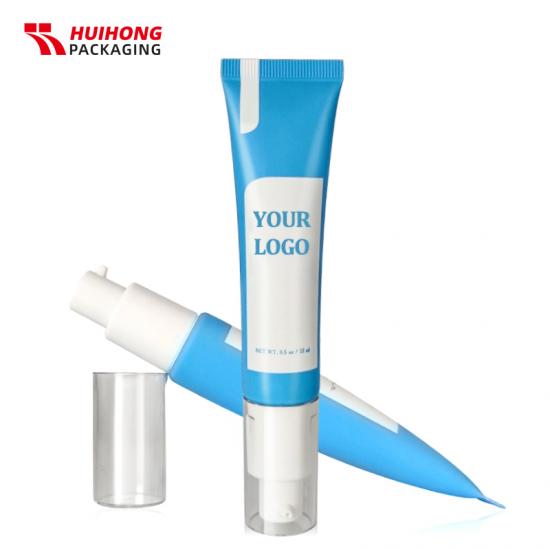
An airless pump tube is a dispensing system that protects your formula from exposure to air and external contaminants. Ordinary squeeze tubes allow air to re-enter as you dispense product. Airless Pump Cosmetic Tubes solve this problem with a sealed chamber. You press the pump head, and the internal piston pushes the product upward. No air backfills the empty space. This design keeps your formula fresh from the first dose to the last.
A piston sits at the base of the tube. When you depress the pump, the piston rises. This movement forces the product out through the nozzle. The tube walls remain stationary. Only the piston advances. This mechanism prevents oxidation and bacterial contamination. Your formula maintains its potency with every use. You also eliminate waste because the piston scrapes the inner walls clean.
You find Airless Pump Cosmetic Tubes in premium skincare lines. Brands use them for serums, vitamin C treatments, retinol creams, and other active-rich formulas. These ingredients degrade quickly when exposed to oxygen. The adoption rate varies by category. Body lotions, for example, show a 22% adoption rate for this packaging.
| Skincare Product Category | Adoption Rate |
|---|---|
| Body Lotions | 22.0% |
Other categories like facial serums and prescription-strength treatments use airless pump tubes even more frequently. The packaging protects sensitive formulas and extends shelf life. If you formulate with active ingredients, an airless pump tube is your top choice.
A squeeze tube is a flexible plastic container that dispenses product when you apply pressure to the tube body. This packaging format dominates the skincare market for good reason. It offers simplicity, low cost, and reliable performance for everyday formulas. You squeeze the tube, and the product flows out through the nozzle or flip-top cap.
You compress the tube walls with your hand. This pressure pushes the formula toward the opening. The tube collapses as the product depletes. Air enters the tube to replace the dispensed product. This air exposure is the key difference from airless systems. The formula contacts oxygen with each use. For stable ingredients, this contact causes no problems. For oxidation-prone actives, it accelerates degradation. The dispensing action itself requires no pump mechanism, no piston, and no internal spring. This simple design keeps manufacturing costs low and production speeds high.
You find squeeze tubes across every skincare category. They dominate daily moisturizers, body lotions, cleansers, and sunscreen products. These formulas typically contain stable ingredients that tolerate air exposure. High-volume products benefit most from this format. A 200ml body lotion in a squeeze tube costs far less to package than the same volume in an airless system. Travel-sized products also favor squeeze tubes. The lightweight construction reduces shipping weight. Drugstore brands, mass-market lines, and value-focused skincare companies rely on squeeze tubes as their primary packaging choice.
You now understand how each tube type works. The next step is a direct comparison across six critical factors. Each factor influences your packaging decision in a different way. Some factors matter more for certain formulas. Others matter more for certain business models. This section breaks down each factor so you can weigh them against your own product needs.
Airless Pump Cosmetic Tubes seal your formula inside a closed chamber. The piston rises as you dispense. No air enters the tube at any point. This design blocks oxygen, dust, and bacteria from reaching your product. The pump head also limits contact between your fingers and the nozzle. Cross-contamination risk drops to near zero.
Squeeze tubes work differently. Every squeeze pulls air back into the tube. That air carries oxygen and airborne microbes. The nozzle stays open between uses. Your fingers may touch the opening during application. For stable formulas, these risks cause no real harm. For water-based serums with natural preservatives, the risk grows with each use. You should consider preservative levels carefully if you choose a squeeze tube for a sensitive formula.
The protection gap between these two formats is significant. Airless systems offer a closed, one-way flow. Squeeze tubes offer an open, two-way exchange. Your formula's sensitivity to oxygen and microbes determines which level of protection you need.
Precision matters for expensive actives and targeted treatments. An airless pump delivers a fixed dose with each press. You get the same amount every time. This consistency helps users follow dosage instructions. It also prevents over-application of potent ingredients like retinol or vitamin C. The piston scrapes the tube walls as it rises. You recover almost every last drop of product. Residual waste stays below 5% in most airless designs.
A squeeze tube gives you less control. The amount that comes out depends on how hard you squeeze. Users often dispense too much or too little. The tube walls also trap product in corners and creases. You may lose 10% to 15% of the formula as unreachable residue. For a $60 serum, that waste costs real money. For a $8 body lotion, the loss matters far less.
Precision and waste reduction favor airless systems when your formula carries a high price per milliliter.
Shelf life depends on how well your packaging protects the formula. Airless pump tubes extend shelf life by blocking oxygen exposure. Vitamin C, retinol, and peptides stay potent for longer. You may reduce preservative concentrations because the risk of microbial growth drops. This change benefits clean-beauty brands that avoid strong preservatives. An airless system can add months to your product's usable life after opening.
Squeeze tubes offer shorter protection windows. Oxygen enters the tube from the first use. Active ingredients begin to degrade faster. Preservatives must work harder to keep the formula stable. You may need higher preservative levels to pass challenge tests. This requirement conflicts with clean-beauty positioning. For stable formulas like basic moisturizers, the shorter shelf life causes no problems. For oxidation-prone actives, the difference can mean weeks or months of lost potency.
Cost shapes every packaging decision. Airless pump tubes cost more per unit. The pump head, piston, and spring add components. Assembly takes more time and labor. Minimum order quantities also run higher. Many suppliers set MOQs at 10,000 to 20,000 units for airless systems. These numbers create barriers for small brands and new product launches.
Squeeze tubes cost far less. A basic tube needs only the tube body, a cap, and a seal. Production runs fast and simple. MOQs often start at 5,000 units or lower. Some suppliers accept 1,000-unit runs for stock designs. This flexibility helps startups test the market. You can launch a new SKU without tying up large amounts of capital.
The table below summarizes the key cost differences.
| Factor | Airless Pump Tube | Squeeze Tube |
|---|---|---|
| Unit cost | Higher | Lower |
| Component count | More (pump, piston, spring) | Fewer (tube, cap, seal) |
| Typical MOQ | 10,000–20,000 units | 1,000–5,000 units |
| Tooling investment | Higher | Lower |
| Best for | Premium, low-volume launches | Mass-market, high-volume lines |
User experience affects repeat purchases. An airless pump offers a controlled, hygienic application. The pump action feels premium. Users press once and receive a measured dose. No product leaks into the cap. The sealed design also prevents spills during travel. TSA-friendly sizes exist for both formats. An airless pump tube will not leak under cabin pressure changes because the chamber stays sealed.
A squeeze tube offers simplicity. Users squeeze and apply. No priming step is needed. No pump mechanism can jam or break. The tube feels lighter in the hand. It also packs flat in a travel bag. The main drawback is leakage risk. A loose cap or a cracked tube can release product inside a bag. Air pressure changes during flights can also force product out of the nozzle.
Both formats serve travelers well. Your choice depends on whether you prioritize hygiene and control or simplicity and weight.
Sustainability now drives packaging choices for many brands. Squeeze tubes hold an advantage in recyclability. A basic squeeze tube uses a single plastic type in many designs. Mono-material tubes can pass recycling stream requirements. You can also add PCR content to reduce virgin plastic use. These features lower your environmental footprint at a modest cost.
Airless pump tubes face more recycling challenges. The pump head contains mixed materials. Metal springs, plastic components, and elastomer seals must separate before recycling. Many municipal programs reject these mixed-material packages. Refillable airless designs offer a solution. Users keep the pump and replace only the inner cartridge. This approach cuts plastic waste over the product's life. The upfront cost runs higher, but the long-term environmental gain is real.
Both formats now offer sustainable options. Mono-material squeeze tubes and refillable airless systems represent the two leading paths forward. Your brand values and budget determine which path fits best.
You need clear numbers before you commit to a packaging format. This section breaks down the cost ranges for both options. It also shows you when the higher airless price makes financial sense.
An airless pump tube typically costs $0.50 to $1.50 per unit at standard order volumes. The pump head, piston, and spring drive most of this cost. Assembly labor adds more. You also face higher minimum order quantities, often 10,000 to 20,000 units. Small brands feel this burden most. A 30ml airless tube with decoration may reach $1.20 per unit at 50,000 units. Volume discounts help, but the floor stays well above squeeze tube pricing.
A squeeze tube costs far less. You pay $0.12 to $0.21 per unit for a 30ml plastic tube with a flip-top cap and standard decoration at 100,000 units. This range breaks down into three parts:
You can launch a squeeze tube product for a fraction of the airless investment. Lower MOQs also reduce your upfront risk.
The airless premium pays off under specific conditions. Your formula contains oxidation-prone actives like vitamin C or retinol. Your product carries a high price per milliliter. You want to reduce preservative levels for clean-beauty claims. You also value near-zero product waste. In these cases, the protection and precision justify the cost. For stable, high-volume formulas, a squeeze tube delivers reliable performance at a lower price. Match the packaging cost to your formula's value and sensitivity.
You have weighed the six factors and reviewed the cost data. Now you need a clear answer for your specific product. The right packaging format depends on your formula's chemistry, your target price point, and how your customers use the product. This section matches three common product categories to the packaging that serves them best.
Serums carry high concentrations of active ingredients. Vitamin C, retinol, niacinamide, and peptides degrade when they contact oxygen. Your packaging choice directly determines how long these ingredients stay potent. Formulation chemists recommend airless systems for oxidation-sensitive serums. The data supports this recommendation.
An airless pump tube blocks oxygen from reaching your formula. The piston rises as you dispense. No air backfills the chamber. This design delivers measurable protection. Consider the oxygen transmission rate, or OTR, for different packaging systems.
| Packaging System | Oxygen Transmission Rate (OTR) | Headspace / Air Exchange | Estimated Potency Retention (6 Months) | Cost Impact |
|---|---|---|---|---|
| Standard Dropper (Amber Glass) | Fails <0.01 cc/m²/day benchmark; rubber teat has high WVTR | Large headspace; each opening admits an "air gulp" of oxygen | Lowest retention; top layer oxidizes (turns yellow) while bottom stays clear | Lowest upfront cost |
| Basic Pump (Plastic) | Moderate; depends on gasket seal quality | Reduced vs. dropper but not zero | Moderate | Mid-range |
| Airless System (ALU-Laminate) | 0.001 cc/m²/day (absolute barrier until seal breached) | Zero headspace; piston moves up to eliminate air-exchange | Highest retention; "Fresh Until the Last Drop" | ~$0.15 more per unit, but reduces vitamin C overage from 20% to 5%, saving ~$0.30/bottle |
Formulators require an OTR below 0.01 cc/m²/day for a 12-month shelf life. This benchmark comes from ASTM D3985 standards for high-barrier laminates. Aluminum-lined airless systems meet this standard. The industry cites them as the undisputed winner for high-concentration L-ascorbic acid stability. You can validate OTR performance through third-party testing with SGS or TÜV per ISO 15105.
An opaque airless pump is your best starting point for oxidation-sensitive serums. The rising piston dispenses product without a dip tube. This design reduces air return and keeps fingers away from the formula. Choose opaque or UV-protective construction rather than a clear outer wall alone. Light exposure accelerates degradation just as oxygen does.
You should test critical performance parameters before you commit to a supplier. These parameters include priming, dose output, evacuation rate, actuator force, leakage, piston movement, and recovery after temperature cycling. Each one affects the user experience and the product's real-world performance.
Keep one fact in mind: airless does not mean zero oxygen. Dissolved oxygen, filling headspace, and oxygen permeability still matter. Your filling process and formula preparation influence the final oxygen load inside the tube. For highly oxygen-sensitive aqueous L-ascorbic acid, an opaque airless system often deserves testing before a traditional dropper. A practical approach is to begin with a 15 or 30 ml opaque airless bottle alongside a dark glass control. This side-by-side test shows you exactly how much protection the airless design delivers for your specific formula.
Airless Pump Cosmetic Tubes give your serum the best chance at maintaining potency. The higher unit cost offsets itself through reduced vitamin C overage. You may cut overage from 20% to 5%, which saves roughly $0.30 per bottle. That saving covers the $0.15 per unit premium and leaves room for better margins.
Daily moisturizers and body lotions follow a different logic. These formulas contain stable ingredients. They sell in high volumes at accessible price points. Your customers use them every day, often in generous amounts. The packaging must deliver value, convenience, and reliable performance at scale.
A squeeze tube fits this profile perfectly. The unit cost stays low. You pay $0.12 to $0.21 per unit for a 30ml tube with a flip-top cap and standard decoration at 100,000 units. Minimum order quantities start at 1,000 to 5,000 units for many stock designs. This flexibility lets you launch new SKUs without tying up large amounts of capital.
The formula itself tolerates air exposure. Glycerin, hyaluronic acid, shea butter, and ceramides remain stable over time. Oxygen entering the tube causes no meaningful degradation. You do not need the barrier protection of an airless system. You also do not need to reduce preservative levels for these formulas. Standard preservative systems handle the microbial risk without difficulty.
High-volume production favors squeeze tubes. The tube body, cap, and seal require simple assembly. Production lines run fast. You can fill thousands of units per hour. This speed keeps your cost per unit low and your launch timeline short.
Travel-sized products also benefit from squeeze tubes. The lightweight construction reduces shipping weight. A 50ml travel lotion in a squeeze tube weighs less than the same volume in an airless system. Lower shipping weight translates to lower freight costs across your entire distribution chain.
Your customers expect simplicity from a daily moisturizer. They squeeze the tube and apply the product. No priming step is needed. No pump mechanism can jam or break. The tube packs flat in a travel bag. These small conveniences add up over hundreds of uses.
Squeeze tubes also support sustainable design. Mono-material tubes can pass recycling stream requirements. You can add PCR content to reduce virgin plastic use. These features lower your environmental footprint at a modest cost. For a high-volume daily product, this sustainability profile strengthens your brand story.
Choose a squeeze tube when your formula is stable, your volume is high, and your price point is accessible. This format delivers the best combination of cost, speed, and reliability for everyday skincare.
Treatments and prescription-strength formulas sit at the premium end of the skincare market. These products contain potent actives at clinical concentrations. Retinoids, hydroquinone, high-dose vitamin C, and peptide complexes fall into this category. Your customers pay premium prices for visible results. The packaging must protect the formula and deliver precise doses.
An airless pump tube meets these demands. The sealed chamber blocks oxygen and microbial contamination. The pump delivers a fixed dose with each press. This consistency helps users follow dosage instructions. It also prevents over-application of potent ingredients. Over-application of a prescription-strength retinoid can cause irritation and redness. A measured dose reduces this risk and improves the user experience.
The piston scrapes the tube walls as it rises. You recover almost every last drop of product. Residual waste stays below 5% in most airless designs. For a $60 treatment serum, this waste reduction protects real value. A squeeze tube may trap 10% to 15% of the formula as unreachable residue. That loss costs your customer money and undermines their perception of value.
Prescription-strength formulas often carry clean-beauty positioning. These brands avoid strong preservatives. An airless system supports this positioning. The sealed chamber reduces microbial growth risk. You may lower preservative concentrations without compromising product safety. This change aligns with clean-beauty claims and appeals to ingredient-conscious consumers.
Regulatory requirements also favor airless systems for certain treatments. Prescription-strength formulas must maintain labeled potency through their shelf life. Oxygen exposure degrades active ingredients and reduces potency. An airless system protects potency from filling to final use. This protection helps you meet regulatory standards and avoid costly reformulation.
The higher upfront cost makes sense for these products. Your customers pay premium prices. They expect premium packaging. An airless pump tube delivers the protection, precision, and hygiene that justify the price. The cost per unit runs $0.50 to $1.50 at standard order volumes. This premium represents a small fraction of your retail price. It also protects the formula's value and your brand's reputation.
Choose an airless pump tube when your formula contains potent actives, your price point is premium, and your customers expect clinical-grade performance. This format delivers the protection and precision that treatments and prescription-strength formulas require.
Sustainability reshapes skincare packaging every year. Two trends now lead the market. Both trends affect your choice between airless pump tubes and squeeze tubes.
Refillable systems let your customers keep the outer package and replace only the inner cartridge. This approach cuts plastic waste across the product's life. Airless pump tubes adapt well to refillable designs. Your customer keeps the pump head and buys a new inner cartridge. You reduce material use without sacrificing protection.
Mono-material designs take a different path. These packages use a single plastic type for every component. A mono-material squeeze tube can pass recycling stream requirements. You avoid the mixed-material problem that complicates airless pump recycling. Your customers simply toss the empty tube into their recycling bin.
Both designs lower your environmental footprint. Refillable systems suit premium products with loyal repeat buyers. Mono-material tubes suit high-volume daily products. You should weigh your customer's habits against your sustainability goals.
Post-consumer recycled content, or PCR, now appears in both tube formats. You can add PCR resin to squeeze tubes at a modest cost. Many suppliers offer 30% to 50% PCR blends without performance loss. This change reduces virgin plastic use and strengthens your brand story.
Airless pump tubes also adopt PCR content. The tube body and outer shell accept recycled resin well. The pump head remains the challenge. Its mixed materials limit PCR use in that component. You can still source PCR for the main body and pair it with a refillable design.
PCR content signals real environmental commitment to your customers.
Review your supplier's PCR certifications before you commit. Traceable recycled content protects your claims and your reputation.
Airless Pump Cosmetic Tubes protect sensitive, high-value actives. Squeeze tubes serve everyday formulas at lower cost. You pay more upfront for protection and precision, or you save with simpler dispensing. Match your packaging to formula chemistry and target price point.
| Product Type | Recommended Packaging |
|---|---|
| Serums and active ingredients | Airless pump tube |
| Lotions and daily moisturizers | Squeeze tube |
| Treatments and prescription-strength formulas | Airless pump tube |
No. The internal mechanism traps product residue. Cleaning damages the piston seal. You should treat it as a single-use dispensing system.
You need one for vitamin C, retinol, peptides, and any oxidation-sensitive active. These ingredients degrade quickly when they contact oxygen.
Yes, if the tube uses mono-material construction. You must remove the cap and verify your local recycling program accepts flexible plastics.
 Réseau IPv6 pris en charge


 un service en ligne
Numériser à Wechat :

 français
 English
 русский
 español
 português
 العربية
 日本語
日本語 한국의
한국의 ไทย
ไทย Tiếng Việt